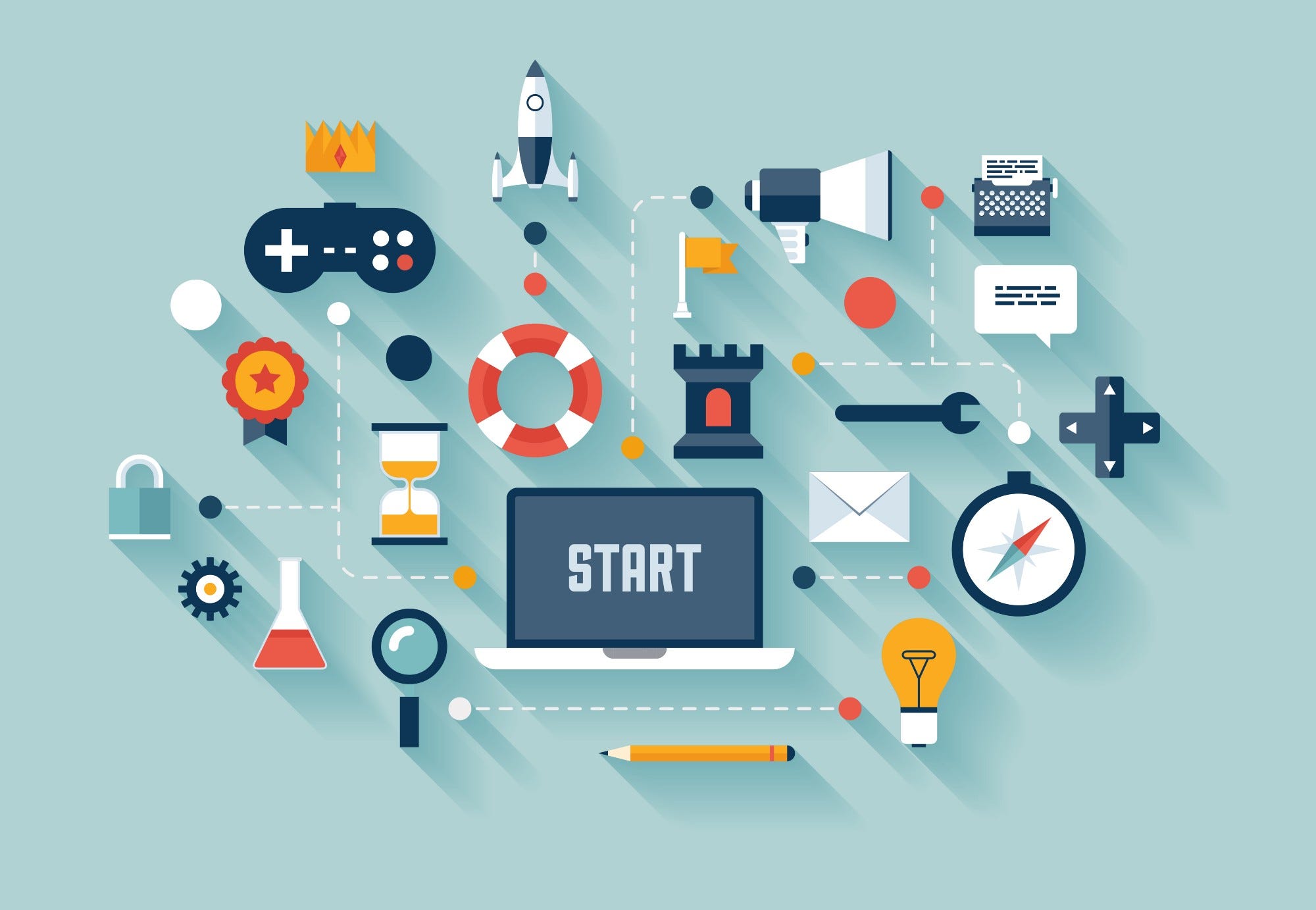
Gamification involves incorporating game elements into non-game contexts, creating an experience akin to playing a game that engenders pleasure in users (Huotari & Hamari, 2016). Since the 2011 Global Game Developers Conference, the concept of gamification has seen a notable increase in mentions across various media (Deterding et al., 2011). This trend signifies not just the widespread integration of gamification in the digital business realm but also its profound impact on user experience. It has evolved beyond merely incorporating game mechanics into other business services to becoming a profound and systematic design thinking approach. For instance, Apple Fitness uses gamification to encourage fitness challenges, while Sleepagotchi applies it to promote healthy sleep habits. Consequently, understanding how various gamification elements can strengthen consumers' continuous engagement in quantified self-activities is of significant practical relevance. This essay examines the impact of gamification elements in digital applications on enhancing user engagement and satisfaction, emphasizing their importance in continuous participation in digital activities.
From the examples of digital applications mentioned above, it is evident that gamification elements make digital applications more engaging and encourages voluntary participation of users in the measurement of quantified data. Gamification, by applying game elements in non-game contexts, stimulates the potential of users through playability, leading to behavioral changes (Charitsis, 2016). In current digital self-quantification applications, a common user retention strategy is to create a strong demand that motivates new users to share their relevant data. These applications extend the user engagement cycle by analyzing the collected raw data and customizing new long-term needs for the users. This personal informatics systems is typically divided into several stages: preparation, collection, integration, reflection, and action (Li et al., 2010). Gamification elements, replacing traditional methods in the preparation and collection stages, effectively promote user participation in digital activities.
Taking Duolingo as an example, this language learning app adopts an innovative modular design, subdividing each language into dozens of modules, with each module further divided into five difficulty levels. Each level contains 1 to 10 lessons, each lasting approximately 2 to 5 minutes. The system is designed so that users can only unlock the next stage of lessons after mastering the current course and passing the corresponding test. To enhance learning motivation, users receive virtual rewards and badges upon completing each lesson, symbolizing their learning progress. Additionally, users can share their progress and achievements on social media. These gamification elements effectively stimulate the user's sense of achievement and pride, thereby promoting long-term and sustained learning participation.
Duolingo's gamified learning system skillfully integrates personalized learning paths, adjusting the difficulty of the courses to meet the user's current language proficiency level. This design philosophy aligns not only with the Goldilocks Rule, providing just-right learning challenges (Kidd et al., 2012), but also greatly enriches the learning experience through the introduction of social interaction elements, such as user’s progress and scores, as well as competition and collaboration between users, satisfy higher-level needs in Maslow's hierarchy of needs - esteem and self-actualization (Maslow, 1943). These social strategies not only increase user retention and engagement but also fulfill their pursuit of social recognition and self-worth. Furthermore an analysis of Duolingo's gamified elements through the lens of self-determination theory reveals how different elements satisfy users' psychological needs (Deci & Ryan, 1985). For instance, immersive gamified elements such as customizable avatars, virtual characters, and personalized challenges fulfill users' need for autonomy; leaderboard, scores, and badges, as achievement-oriented gamified elements, effectively address users' need for competence; while forums, sharing systems, and friend features within Duolingo meet users' need for relatedness. This meticulous design of gamified elements allows Duolingo to not only meet users' language learning needs but also precisely respond to their deeper psychological motivations. Thus, Duolingo successfully transforms language learning into an activity that is both challenging and attractive through gamification elements, significantly enhancing learning efficiency and enjoyment, while also meeting the deeper psychological needs of the users.
In summary, this essay explores the influential role of gamification in digital applications, emphasizing its effectiveness in boosting user engagement and satisfaction. Using Duolingo as an example, it illustrates how the incorporation of gaming elements in non-gaming environments not only engages users but also meets their psychological needs, demonstrating the power of gamification in enhancing user experience. Looking forward, the principles and strategies of gamification, as a branch of digital media, open up promising avenues for innovation in the digital product domain, heralding a new era in user experience and digital interaction design.